



From wildlife to fashion, photographers have explored their medium far more since the invention of the DSLR. As it requires no film, trying to capture a priceless photo doesn't burn a hole through the pocket anymore. Whether you're a beginner or a veteran, this guide will help you choose the camera most suited for your type of photography.
CAMERA TYPES
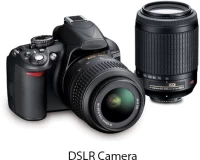
DSLR Camera
- These are advanced cameras that use an optical viewfinder (mirror system), to give the user an exact image of what the sensor captures.
- DSLRs are known for the full control that they give to the user, high resolution and wide compatibility.
- DSLR cameras either come with a kit lens (for example, 18-55 mm focal length) or just the body
Mirrorless Camera
- These are also referred to as Interchangeable Lens Cameras (ILC) or Compact System Cameras (CSC)
- These cameras don’t have an optical viewfinder and usually come with an electronic viewfinder (EVF).
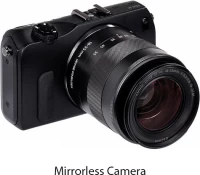
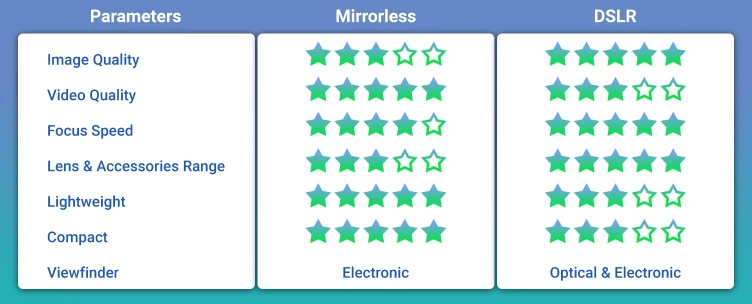
DSLR vs Mirrorless Camera
EXPOSURE
Understanding Shutter Speed, ISO and Aperture
Exposure is the amount of light a camera's sensor captures. Too much light results in a washed-out (overexposed) photo, too little light and the photo will be too dark (underexposed). A camera's aperture, shutter speed and ISO settings directly affect exposure but, more importantly, they allow you to control how each photo will look. Photographers use these three key settings to get a range of effects and styles of photographs:
Let's look at how each of these factors affect the image captured in detail.
Shutter Speed
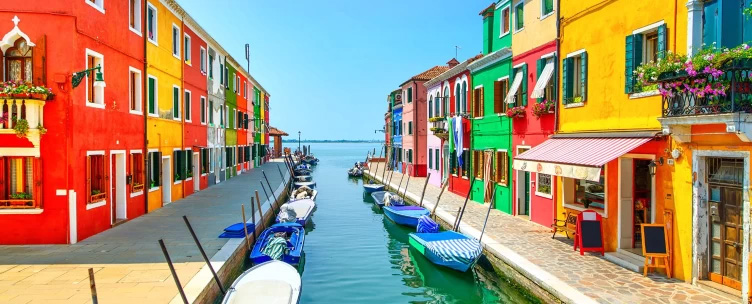
The shutter speed setting controls how long the shutter stays open, allowing light to pass through the aperture and reaching the image sensor. Shutter speed is measured in seconds and fractions of a second: 1s, 1/2s, 1/4s, 1/250s, 1/ 500s, etc.
How does it help?
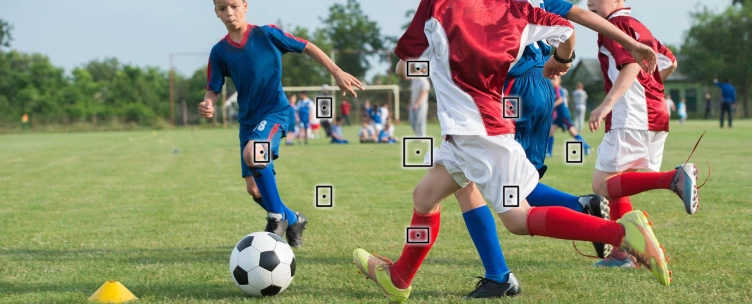
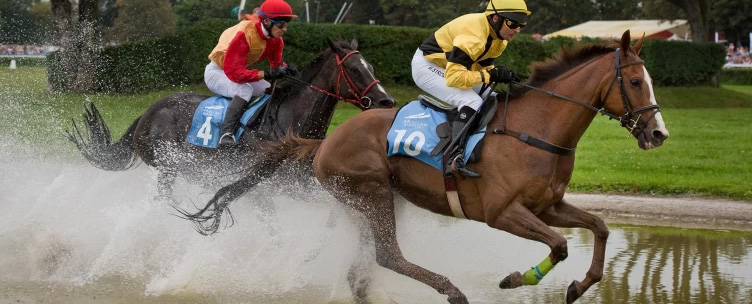
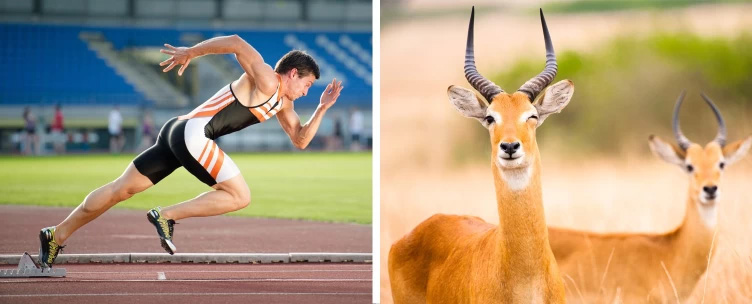
A high shutter speed can capture images of moving subjects, freezing a moment of action in the photographs. For example, a photo of kids playing cricket or football or a photo of galloping horses.
High Shutter Speed
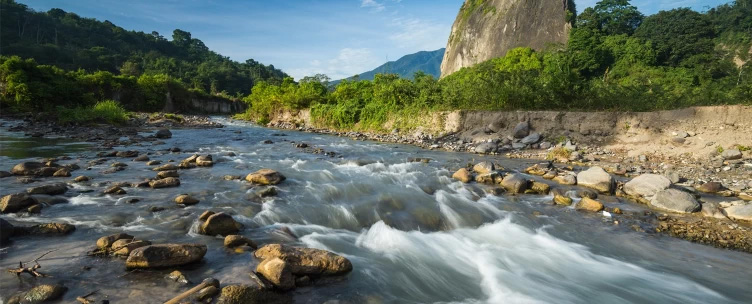
Slow Shutter Speed
Aperture and Depth of Field
Aperture refers to the opening of the lens which allows light into camera. The amount of light entering the camera can be controlled by changing the aperture size. Typical examples of aperture ranges are f/1.6, f6.3, f/10, f/22.
The aperture measurement is indicated by the f-stop or f-number. A higher f-stop number (F/22), indicates a smaller aperture opening, and lesser light passes through the lens. In such cases, the object and background will both be sharp. This is called a larger depth of field as both object and background are in focus. Alternatively, a lower f-stop (F/1.8) means a larger aperture and more light passing through the lens. So the object will be sharp and background will be blurred. This gives a shallow depth of field.
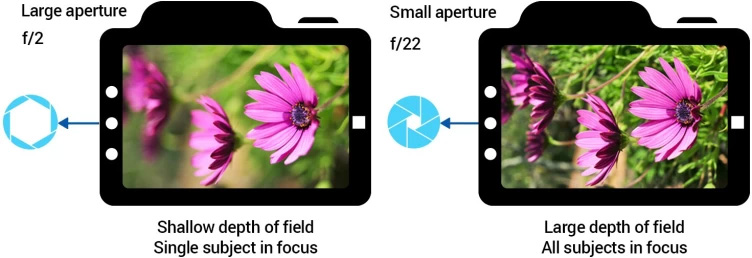
Note - Depth of field refers to the distance (depth) between the nearest and farthest objects that appear to be in focus in a photograph.
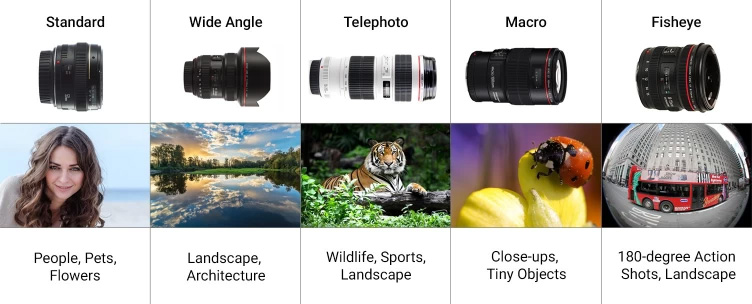
For more details on Camera lens. Please click on the below link https://www.daraz.lk/camera/
ISO
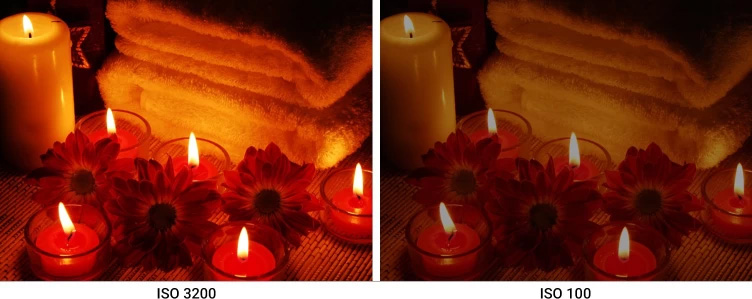
ISO Sensitivity Indicates How Sensitive the Camera's Sensor is to Incoming Light
For example, if you're shooting indoors (such as for a birthday party) with low light conditions, you require a higher ISO setting. Similarly, if you are shooting outdoors in brighter lighting conditions, you require a lower ISO setting. Typically, DSLRs come with an ISO ranging from 100 to 51,200, allowing you to manually control your ISO sensitivity.
Exposure Control
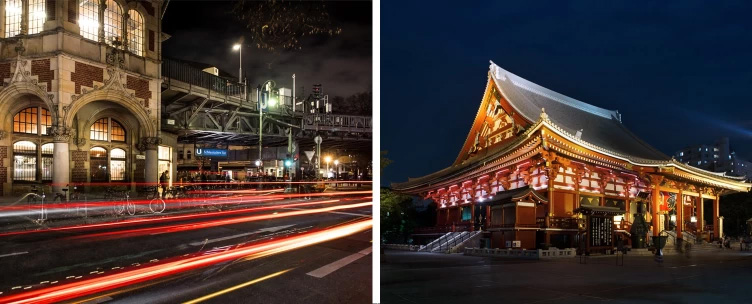
As photography is essentially painting with light, exposure control is vital. A photographer can achieve the same exposure through different settings combinations of ISO, aperture and shutter speed. Controlling the exposure is key to capturing some interesting light effects on photographs. There are many tried-and-tested, sought-after effects that are easy to execute, if done carefully, such as bokeh, motion blur, and glow.
Higher ISO setting, larger aperture setting and a slow shutter speed will result in the camera capturing more light, making the image brighter. The opposite conditions also hold true, for cases where lesser exposure is needed.
Burst mode
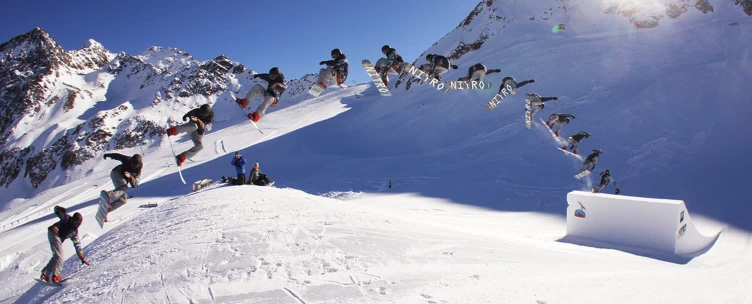
Burst mode refers to taking a rapid succession of photos by holding the shutter button down. Burst mode is measured in frames per second, that is, the number of pictures that can be taken in one second. Some DSLRs can take as many as 10 shots per second, or more. It requires a high (fast) shutter speed.
Sensor Types
A sensor is used in digital cameras to convert light into electronic signals that create an image. Bigger sensors capture photographs that are higher in quality. There are primarily three types of image sensors used in cameras.
CCD (Charge Coupled Device)
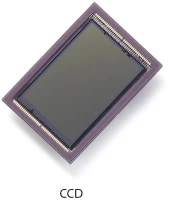
CCD sensors offer superior image quality with better dynamic range and noise control. They consume a lot of power. However, CCD sensors are available in very few cameras in the current market.
CMOS (Complementary Metal-Oxide-Semiconductor)
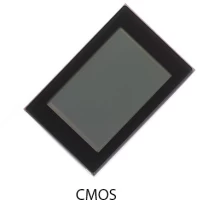
Usually, cameras with CMOS sensors are cheaper than those with CCD sensors. They consume less power. Panasonic, Olympus and Leica use a different type of CMOS sensor technology called the MOS sensor or NMOS sensor. This sensor can achieve CCD-like image quality with lower energy consumption.
Back Illuminated or BSI CMOS
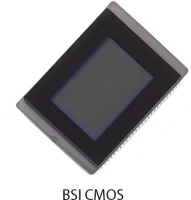
These are more advanced CMOS sensors that use a different layout. They produce images with less noise and better color reproduction compared to CMOS sensors. Their performance in low-light conditions is excellent.
Sensor Sizes
Full-frame and Cropped Sensors
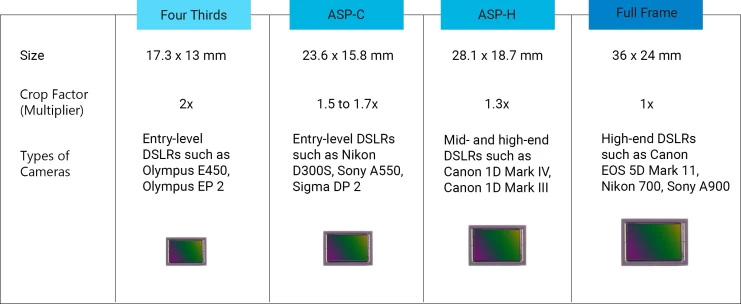
Sensor sizes are typically compared to a standard 35 mm film. A standard 35 mm frame or a full frame is 36 mm x 24 mm. There are two types of sensors:
- Full-frame Sensors
- Cropped Sensors
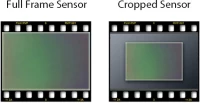
What is Crop Factor?
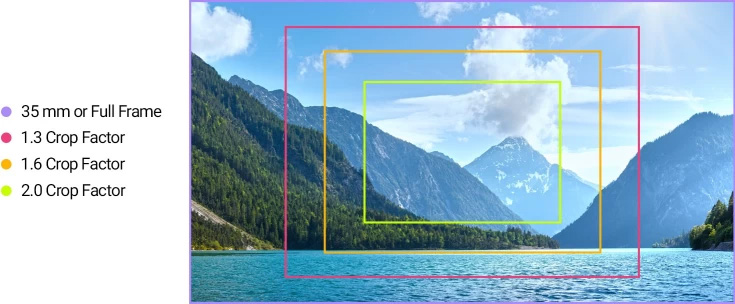
Most cameras have sensors that are smaller than the 35 mm film format. So any image you click with these cameras is created from a smaller area than the standard film, which is why they are called cropped sensors. When the same lens is used on two different-sized sensors, the smaller sensor will capture a smaller field of view.
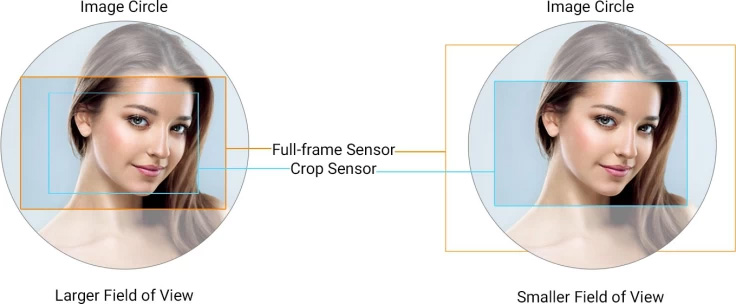
The crop factor helps in understanding exactly how the field of view changes in cropped sensors when compared to full frame sensors.
For example - APS-C sensor has a crop factor of about 1.5x to 1.6x. A 50 mm lens on this sensor would give the same field of view as a 70 mm lens on a full-frame sensor.
Which Sensor is Ideal? Full Frame or Cropped?
Advantages of Full-frame Sensors
Advantages of Cropped Sensors
Sensor Size Comparison
Nikon's mirrorless cameras come with a smaller sensor format called CX (13.2 x 8.8 mm) with a crop factor of 2.7.
Megapixel
The size of a photograph is measured by the amount of pixels it contains.
Advantages of High Resolution
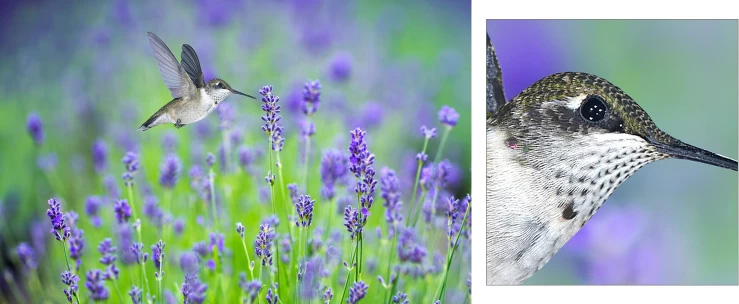
A higher resolution photograph can be captured by a camera with a higher MP rating, which means:
Video Quality
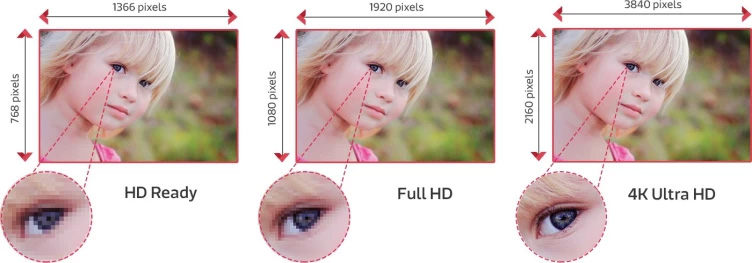
Most cameras capture Full HD videos that feature highly detailed images with bright colors. Some cameras include special autofocus technology for videos, so you can keep shooting moving subjects in focus. Newer Mirrorless and DSLR cameras can also record videos in 4K (3840 x 2160), also called ultra high definition.
Comparing the Clarity of HD Ready, Full HD and Ultra HD
Features
Wi-Fi
Built-in Wi-Fi allows you to easily upload photos to a smartphone or tablet. You can share pictures, through social networks, for instance, directly from the camera.
GPS
Some cameras come with GPS features that tracks the exact location of each photo, allowing you to create a visual map.
NFC
The NFC (Near Field Communication) feature provides you with an added advantage of one-touch wireless connectivity with compatible smartphones and tablets. A connection is activated automatically when the mobile device touches the DSLR, allowing for immediate image or video sharing between devices.
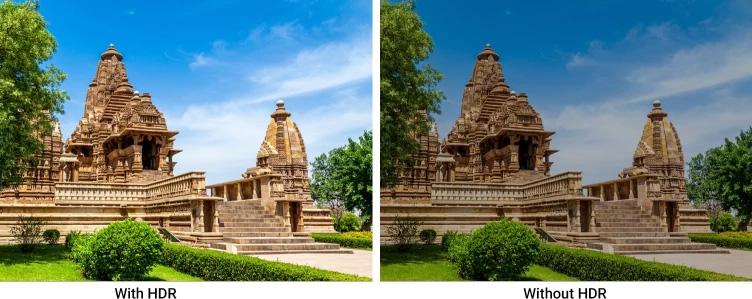
Built-in HDR
The built-in HDR function in a DSLR camera takes a number of pictures of each scene you select, all at different exposures. The camera will then combine the best parts of each photo into one great image which produces a higher dynamic range.
Autofocus Points
Focus points are the little empty squares or dots that you see when you look through your viewfinder. The number of autofocus points will depend on the camera, and can range from a very basic system of 7 points on an entry level DSLR, to a highly complex system of 61 points on a professional camera. Focus points are of two types - Vertical and Cross
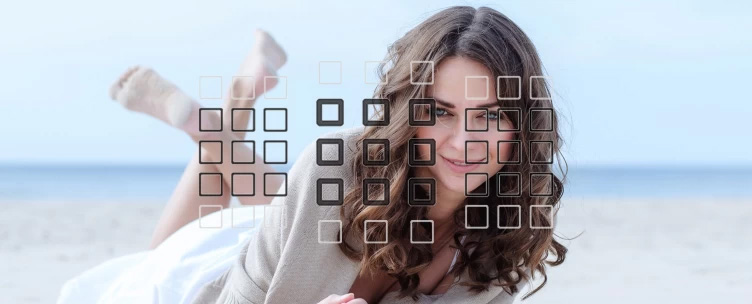
Cross type AF point systems are ideal for wildlife photography and sports photography. The AF points you see in the viewfinder will be a mix of the two types, depending on the camera. A larger number of cross-type AF points will mean the AF system is more accurate and responsive. This is something to look for while choosing a camera.